
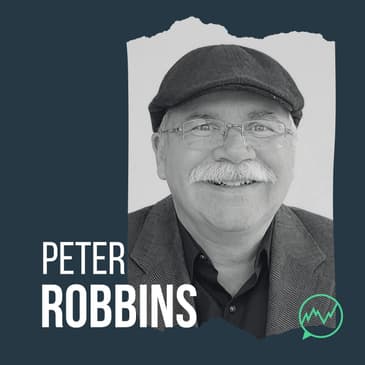
Peter Robbins is the author of The Trader’s Journey. He entered the financial markets 50 years ago with nothing but a dream, his friend, and a parental signature to trade the markets, surviving decades of tectonic shifts to navigate the transition from outcry trading to the digital age.
After starting out at age 15 and carrying the weight of massive commission costs back in the 1970s, Peter developed a deeply disciplined, business first framework across multiple asset classes from day trading futures to position trading ETFs. Today, now retired, his edge is built on five decades of experience and an unwavering focus on self awareness, using strategy to outline his trades while deep psychological clarity gives him the execution resilience required to survive.
In this conversation, Peter pulls back the curtain on his 50 Year Market Evolution, sharing the hard truths that allowed him to achieve true longevity in a game where most do not last. He breaks down the true mechanics of a trader’s edge, the absolute necessity of aligning strategy with personality, and how he transitioned from chasing the "Holy Grail" to mastering his own internal battle.
In this episode, we explore:
· The Hard Truths of a 50 Year Trading Career
· The mechanics behind the two sides of a true Trader’s Edge
· Why it’s important to treat trading exactly like a serious business
· The importance of building an edge that matches your personality
· How Peter views position trading and selects industry leaders today
· Lessons learned from his early "Aha Moment" of learning to take small losses
· His advice for beginner traders caught up in false guru expectations
About Peter Robbins:
Peter is a veteran professional trader and mentor known for his remarkable market longevity and transparent approach. Starting his journey at just 15 years old, he has documented and shared his hard-earned insights across five decades of trading full-time, part-time, and in retirement. He specializes in longer-term position trading in ETFs and U.S. stocks, focusing heavily on trader psychology, limiting beliefs, and the structural discipline required for sustainable market success.
Links + Resources:
X (Twitter): https://x.com/prrobbins
Amazon (The Trader's Journey): https://www.amazon.com/Traders-Journey-Navigating-trading-success/dp/1804091669
Sponsor of Chat With Traders Podcast:
Trade The Pool: http://www.tradethepool.com
Time Stamps:
Please note: Exact times will vary depending on current ads.
00:00 The Hard Truths of a 50 Year Trading Career
05:20 Peter's Introduction into Trading at 15 Years Old
12:15 The Real Reason Why Most Traders Fail
16:58 The Aha Moment
23:43 We're All Humans
31:21 Why Most Failures Are Execution Failures
35:46 Finding and Executing the Best Strategy for Your Personality
38:05 Debunking the Limiting Belief "I Have to Work Hard to Make Money"
44:21 Common Behaviors That Destroy Trading Accounts
47:40 Stop Looking for the Holy Grail
51:35 Where to Follow Peter Robbins and get his book The Trader’s Journey
Trading Disclaimer: Trading in the financial markets involves a risk of loss. Podcast episodes and other content produced by Chat With Traders are for informational or educational purposes only and do not constitute trading or investment recommendations or advice.
Learn more about your ad choices. Visit megaphone.fm/adchoices
[00:00:00] What would your trading look like if capital wasn't the constraint? That's the reality for most traders. It's not skill holding them back, it's size. Trade the Pool changes that. Step into the US equity markets with up to $200,000 in buying power without committing your own capital. Full access to stocks and ETFs, long or short. Executed with the precision and freedom serious traders expect. Your performance is measured by one standard, disciplined risk management and consistent execution. Meet that standard and you operate at the end of the day.
[00:00:30] At scale. No subscriptions, no ongoing obligations, just a clear path forward. For those ready to trade beyond limitations, this is the next. Doesn't your portfolio deserve the best? Then join TastyTrade, Investopedia's best platform for options trading 2026. Trade smarter with advanced charting tools, backtesting, a pre-built strategy selector and more features. Join TastyTrade today and earn a double commission rebate up to $3,000 total on your stock and ETF options.
[00:01:00] For 30 days. Visit TastyTrade.com slash chat for more info. All applicable regulatory exchange and clearing fees still apply. Options involve risks and are not suitable for all investors. Learn more about TastyTrade promo terms and conditions at TastyTrade.com slash double. Offer expires May 31st, 2026. TastyTrade. TastyTrade Inc. is a registered broker, dealer and member of FINRA, NFA and SIPC.
[00:01:26] Trading in the financial markets involves a risk of loss. Podcast episodes and other content produced by Chat with Traders are for informational or educational purposes only and do not constitute trading or investment recommendations or advice. Oh, you got to become like a robot where you don't have emotions and that's how you become a good trader. It's like, that's like saying you got to learn how to not breathe, right? Like you can't do that, right? So again, like you say, your emotions don't need to disappear and they won't disappear, right?
[00:01:53] But your processes need to be stronger than your impulses, right? So this is where understanding your impulse, what that is, understanding the emotion you're feeling and why you're having that impulse. One, you can build up resilience over time. So it's not about eliminating your emotions, it's about being aware of your emotions and being aware of your response and countering that. And then slowly over time, you build up a resilience to it and a better understanding.
[00:02:16] And that's where the awareness piece comes in, right? Like really observing what you're feeling, what you're doing, why you're doing what you're doing, and then try to get to those underlying issues and try to deal with them. Like a lot of people, you know, they have trauma from the past, they have all sorts of beliefs from the past, and those are going to trigger them and they're going to trigger behavior. And until they actually deal with them and understand them, they're going to continue to make those mistakes. Markets, speculation, and risk. This is the Chat with Traders podcast.
[00:02:48] All right, traders, welcome to another episode of Chat with Traders. My guest today is Peter Robbins, a trader with more than 50 years of experience navigating the financial markets. Now, Peter's journey spans multiple market eras, from a time when trading was driven largely by fundamentals and high commission costs to today's fast-moving, technology-driven environment.
[00:03:09] Over those decades, he's experienced the full spectrum, trading full-time, part-time, making significant gains, taking meaningful losses, and continuing to show up year after year. Professionally, his background includes corporate finance and investments across the medical technology and insurance industries, as well as serving as a corporate controller in the building industry. But throughout it all, Peter has remained just a constant passion for trading.
[00:03:34] His style has evolved with the markets from day trading futures, swing trading stocks and options, to longer-term position trading and ETFs. That reflects both adaptability and longevity in a game where most do not last. Today, Peter is dedicated to mentoring traders and sharing the lessons he's learned across five decades in the markets.
[00:03:54] With an online following of over 100,000 people, he continues to emphasize not just strategy, but mindset, discipline, and self-awareness required to survive and succeed in trading. In this episode, we're going to explore what's changed in trading over those last 50 years, what hasn't changed, and the deeper truths Peter has uncovered about risk discipline in the internal battle every trader faces. Please enjoy my conversation now with Peter Robbins.
[00:04:22] Peter, thank you so much for joining Chat with Traders. Thank you so much, Kevin. That was quite the introduction. It makes me feel old. Well, it's been the trader's journey, just like the book that you just wrote and came out with, read it over the weekend. And what a great book, The Traders' Journey. So let's rewind a little bit and go through Peter's trading journey 50 years ago, back in the 70s. What was it like now versus then versus now?
[00:04:52] Well, again, if you think about it, what was the 70s like, right? No computers, no internet, no charting. I think they had charting back then, but it would come out once a month or something. Someone would do charts and send it out as a subscription. There is many brokerage firms, a lot of small boutique brokerage firms before the consolidation. And like you mentioned in the introduction, high commission.
[00:05:17] So for someone with a small account, you're basically trading in order to pay the commissions. And it also made you sort of trade a certain methodology that may or may not be right for you. But, you know, you weren't able, like as opposed to today, right, where zero or very low commissions, instant access almost. Like you can open an account, you can start trading immediately.
[00:05:43] And, you know, so all of the risks, all of the changes there now you can day trade, you can swing trade, you can not worry too much about commissions. You can get in and out of a trade if you're wrong. And so it offers a lot of advantages, but there's also additional risks involved, right? There's a temptation to overtrade. There's a temptation to want to trade a certain style, like everyone wants to day trade, it seems. But a lot of people aren't cut out to day trade.
[00:06:12] So a lot of people are drawn there only because the environment allows you to. But, you know, again, it's sort of a gift and a trap at the same time, right, depending on what your situation is. Right. I remember reading in your book, too, where you would say you may have a profitable trader from back then, but they're net negative because of how expensive it was to trade back then. Yeah. Unless you had a large account. I mean, think about it.
[00:06:40] Nowadays, people have $500 in their account they can trade. Right. Whereas back then, an in and out commission might be $50 or more, might even be $100. So if you have only a $500 account, it's literally – it's almost impossible to make money, right? So what was your introduction like? What was it about trading that just hooked Peter immediately to it? Yeah. But when you say five decades, you've got to think how old was I when I started trading.
[00:07:10] So I was literally 15 years old when I started trading. I had to get my parents to open an account for me. Me and a buddy from school, we were interested in business. We were interested in trading just like most people today, right? They're interested because they want to make money. Let's face it, right? That's what draws people to it. And we were getting ready to go to university, looking for a way to make some extra money. And again, like most traders today, we had no clue what we were doing. But that's where, right? You get it. You jump in.
[00:07:40] What do they say? It's like building a plane when it's flying, right? So you jump in. You're learning the lessons. And then you're adapting and changing as you go. And a lot of that would have to have been, you know, well, we can't really trade until we have more money. Or, you know, and then again, slowly, luckily, fairly quickly, things change where the internet came out. Computers came out. All sorts of tools and things.
[00:08:04] So it's obviously, you know, we're able to quickly adapt to that environment and trade accordingly, right? So you said that it was more fundamentally driven back then. And then it eventually changed to technicals. Are you able to kind of graph that out over the years where, you know, we have different – you have this fundamental analysis, technical analysis, trader analysis? How has that shifted over all these years? Yeah. Yeah.
[00:08:32] So back then – and it's not only the 70s, but probably the 80s. And even nowadays, there's a lot of people that feel technical analysis is kind of, you know, woo-woo. It doesn't really – it doesn't really work or whatever, right? But it's become more and more acceptable and become more and more available to people, right? Like, think, back then there literally was no charting capabilities. There was some guys in the brokerage firms that would draw the charts by hand. But you can imagine how they were considered, right?
[00:09:02] They were like, okay, that's that crazy guy in the corner over there with his charts, right? So then eventually, you know, and when you think – when you look back to the old classic books on investing, a lot of them are value investing books. And then there was some technical analysis books, right? But again, unless you had the capabilities to do it, it made it very hard to trade accordingly, right?
[00:09:26] So – and then, like I say, fairly rapidly with the advent of the PC and computer technology, then the tools started to come out like, you know, all the tools that people are using today, right? And then obviously, as it became more and more advanced as far as technologically, sizes of computers, speed, et cetera, you know, you can do everything from AI trading to, you know, trading ticks, right? So –
[00:09:54] Over all the years, what instruments have you traded? Have you traded everything? Yeah, I think at some point or other, I've pretty much traded most instruments from, you know, again, started off – I'm from Canada. So as a young child, you know, it's a resource-based market, as you know, in Canada. Everyone trades penny stocks, you know, that's why you're in it to make the big money on the penny stocks.
[00:10:19] Just like a lot of traders nowadays are also attracted to high volatile, you know, instruments in order to make money fast, right? So, you know, so traded that and then got more into just stocks with a more of a longer-term focus. And when you're saying fundamentally driven, like I say, a lot of the information was, you know, information on fundamentals of a company. But I'll give you an example.
[00:10:42] For example, a brokerage firm that would, you know, provide information to their clients, they would have a newsletter come out every two weeks. So that's another big difference, right? Like now everything is instantaneous information, right? Like you just – you can go online and people are recommending things as – it's live, right? As things are happening, the market's changing. Back then, you know, you didn't – again, the stock market itself was open cry.
[00:11:11] You know, it was all manual. It was all, you know, it was very slow, right? You had to call your broker. The broker had to call the floor. The floor had to do the trade. So that takes a long time, right? So you're not in it to, you know, get a penny difference in a bid and ask or big spreads, big slow process, right? Right.
[00:11:33] But yeah, so over time, yeah, traded futures, traded commodities, traded options, traded stocks. And then not only different instruments but also different styles and adapted styles depending on my personal situation. And where do you land today? Position trading is what I was reading in the book, right? You do a lot more just position trading, right? Yeah. Well, I'm retired now. So, I mean, I don't – I always say day trading.
[00:12:03] First of all, day trading is a tough thing to do. But the odd time I might day trade just when things are really volatile and I have some free time. But I'm retired, right? I want to spend my time doing other things than trading. A lot of people that do trade, they're fixated on it and they're almost addicted to it, right? But it's also the ability to stand back, take a longer-term perspective and realize that chances are, especially depending on your own personality, that might be more successful for you anyways, right?
[00:12:33] So that's where I've sort of landed. I trade mainly U.S. stocks right now. Again, typical U.S. stocks, leaders in the industry, leaders in the market. And that's my focus pretty much. So you've experienced both making a lot, losing a lot. Through all of that, what do you think has led to the longevity? Because that's where a lot of traders fall off, right? They just don't – they don't last because the market, as you know, is a mirror. It's a mirror on our flaws.
[00:13:02] And then traders oftentimes will say, you know, this is more than I can handle. I don't want to come face-to-face with my flaws. So I have an idea from reading your book. You know, you used to do one word that was just thematic, if you will, in your book that just kept coming up and up is passion. Passion. So – but what led to the longevity? Why do you think most traders quit? Is it that passion or is it something else?
[00:13:29] Well, I think – and again, getting into the trading business, and I call it business on purpose, but getting into trading, first of all, like anything, if you want to learn to trade, you should – you probably need a passion. Just like whether you're going to learn to play golf or learn to play an instrument or become a lawyer or a doctor or whatever, you need to have a passion for it, right?
[00:13:53] Unfortunately, a lot of traders, they do get into trading not because they're necessarily passionate about trading. They're passionate about making money, right? And they come with unrealistic expectations. They come with, you know, sort of the wrong approach, right? It's like I just want to make quick money easily. And then once they get in there, they realize quickly that, oh, number one, it's not easy. It's a very difficult business.
[00:14:20] And those that stick around, they either find that they can learn and adapt and are resilient. They learn quickly and they adapt accordingly. And unless you do that, you're gone, right? And also, they find out whether or not they have the real passion. And if they do, they're liable to stick around longer. And, you know, they learn quickly. But, yeah. I've heard it. Like – go ahead. They have a skill.
[00:14:48] Like they realize, like anything else, trading isn't just anyone can do it, right? As much as all of the stuff you see online out there, it's like anyone can do it. One weekend course, you'll become an expert trader. Just follow my methodology and you'll become rich overnight. All of these things, people are attracted to the trading for all the wrong reasons, right? But once you get into it, either you develop the skills and you have the skills and you have the interest or you don't, right? And if you don't, you're going to quit.
[00:15:17] Just like if you're – when you're growing up, if your dad wants you to play hockey and you get skates on and a hockey stick and you go out there and you just hate it and you're just no good at it, right? It's like you're not going to stick around, right? And something I've heard put like this, where traders, they underestimate the amount of work that's going to take and then they overestimate the profits. And so, yeah, they come into it with the wrong mindset.
[00:15:43] So something that I love about you, Peter, is you speak hard truths, which you were just writing right now. In fact, that saying where you're like, oh, I can make the $400 a day. You had written about this, this hard truth, which again, these hard truths I want to get into because it's not a very popular conversation to speak hard truths, as you're aware. Now, it may be a profitable approach, but not necessarily popular. I mean there's a difference there, right?
[00:16:10] So I think traders, they will benefit a lot in hearing a lot of these hard truths, like the one you were just alluding to, which I read. And it's so true. You'll see the gurus. They say, look, all you need to do is make the $400 a day, and that's $100,000 a year. But the problem is that you noted, Peter, is most traders are going to start likely with $10,000 or less in their account. And so if you have $10,000 and you're making $400 a day, that's $1,000% year-over-year return, as you pointed out.
[00:16:40] So people have those unrealistic expectations on trading. Is that what you've seen over the years? Yeah. Well, again, when they start trading, and let's look at sort of what people are sold about trading, right? So to your point, hard truths are not things people want to hear, but they should hear, right? Yeah. But what they want to hear and what they get excited about are all these false claims, right?
[00:17:08] That you can make lots of money, trading's easy, it doesn't take long to learn it, et cetera, et cetera, right? And that's part of the reason why I wrote the book. And I know you mentioned I have a following on X. Again, I wasn't expecting to get a following because I was giving out the hard truths, right? But obviously, there is a group of people that recognize that these truths are real, and they want to approach trading like a business, and they want to approach it correctly. And that's what's exciting to me, right?
[00:17:36] It's that, okay, there is this group, and chances are they're the ones that are going to succeed, and they're going to be around longer. But it's not a sexy sell, right? It's not, from my perspective, even selling this book, right, is probably a lot harder than someone saying, follow this book. This is my methodology. You can copy it, and you can make tons of money, right? As opposed to me saying, here's a book that will teach you about the business of trading. It'll give you a foundation. It'll show you all the things that are real.
[00:18:05] You know, who wants to hear that? Yeah, you could have named it how to make $100,000 with a $500 account. I'm probably sold a lot harder. But I love it. You have the hard truths. And you're right. Like, you have a great audience. I mean, a really large, 133-plus thousand people that want to hear these hard truths. You have real traders.
[00:18:34] These have to be real traders. So you have a great audience there. So one thing I noted as well from your journey, Peter's journey, is the aha moment you've spoken about. So traders experience these aha moments over their journey. And one that you experienced, you said, was a big turning point for you, was just learning how to take small losses along the way. Can you take us back to when that really clicked for you?
[00:19:02] Yeah, and like I say, as you're learning to trade, especially if you don't have, like for me personally, I didn't have anyone in my family or any friends that were traders. So this was learning on my own. And back when there wasn't a lot of, you know, traders or mentors out there. So when you're trading, you quickly, you know, you get hurt, right? You lose money.
[00:19:25] And every time you lose money or you, and again, that's, you either learn a lesson or you continue to repeat it until you're either broke or you give up, right? But the idea that these aha moments where every time that you are trading and you find yourself doing a certain behavior over and over again, that's self-destructive or is hurting your account. And unless you step back and say, okay, this isn't working, I need to change. You know, that's what I meant by these aha moments, right?
[00:19:54] And the big one, and let's face it, if you look at trading from a mathematical perspective, you know, it's really simple, right? You have percentage wins, percentage losses, average win, average loss, and you have your, and it multiplies out, right? And then that's either you have a positive expectancy or you're losing money, right, depending on what those stats are. And one of the big aha moments you learn quickly is that if you take big losses, and I know a lot of the trading books, they show that, right?
[00:20:23] Like if you lose 50%, then you need 100% return in order to get back to your breakeven. So when that clicks, it's like, okay, you become more comfortable taking those small losses because you realize you can have 10 losses instead of one. And when you do those 10 trades, you have a higher probability of making money, right? Do you think that traders have to go through this pain or these drawdowns to truly learn that lesson?
[00:20:51] Because I've heard it put this way, Peter, which, you know, I'm on the fence. I'm curious to hear what your thoughts are over 50 years. Some traders will say, look, you don't have to crash a plane to learn how to fly. But I will say in trading, from what I've seen in a lot shorter amount of time than your experiences, traders, when they go through those drawdowns, it gets seared into their memory to the point where they have crashed that plane and it's not going to happen again.
[00:21:18] So I've seen where traders do in the drawdowns really learn a lot more and quicker than otherwise. But what are your thoughts on that? What's your experience? Yeah. Well, again, it depends. Let's say, for example, if we're talking about mentorships as an example, right? If someone's there to help you, hold your hand, teach you, then obviously they help you see the blind spots. They help avoid repeated mistakes. At least they can tell you those things, right? The question is whether, and even like my book, right?
[00:21:47] I lay out exactly what you can do in order to see the mistakes you're going to make, see these things in advance. But whether you have the ability to absorb that knowledge and adapt to it. And a good example is let's say someone tells you, you know, all of these great traders, they've all lost and burned an account at one point in time or another. But chances are, why did they do that, right?
[00:22:14] And it was either because they took on too much risk or they made an emotional decision or they got caught up in the emotional side of business and did behavior that they knew was wrong and shouldn't have done, right? Now, so the question then becomes, can you as an individual, if you've got the right education and the right sort of knowledge, can you make those changes before you have to take that suffering?
[00:22:43] And a good example, like you say, is taking small losses, right? Everyone knows that you need to take small losses in order to survive here. Yeah, if you take a big loss, it's going to reinforce that lesson. But oftentimes, a lot of people will make that mistake and have to relearn it over and over again, right? And this is where it comes back more to the psychological side of trading, right?
[00:23:07] So the strategy with a positive expectation and the rules that you need to follow, that's sort of the easy part, right? There's lots of methodologies out there that people can trade. But it's your ability to trade it that really gives you the edge, right? So it makes the edge possible.
[00:23:26] And if you're, like what happens is you get triggered for some reason, you have an emotional response, and then you have a behavior according to that, right? And then you realize, oh man, I shouldn't have done that. So that's where, again, journaling, tracking your trades, understanding your emotion at the time that you're doing these things and the behavior that comes out of it helps to you to build up that resilience over time, right? You understand that reaction.
[00:23:55] And then, you know, as you're about, like I know for myself, let's say in the past where the market was crashing, I would get really excited and start buying puts. And just at the time that the market's bottoming out, right? Because again, that's the emotional response. People are scared and think they can make money on the downside. And now I realize, okay, I'm feeling that.
[00:24:19] Chances are that's a sentiment signal to me that, okay, instead of getting short, maybe now it's time to get long because you've made this mistake before. And being able to step back and look at the market, where are we in the market, what's really going on, and be able to feel your emotions and the behavior you want to do and then stop it, right? And then do it. Oh, man. That is excellent.
[00:24:48] I mean, so what you're alluding to is over 50 years, the emotions may not necessarily go away, but you learn how to respond to them. You don't necessarily act, right? Like if you have the fear of missing a move, you don't have to act on that. In fact, you can act in the contrary against the 90% of traders. Is that what you're saying?
[00:25:11] And so the emotions may be, because some traders think the emotions will subside over the years, but over 50 years, are you saying the emotions are still present? You've just learned how to act on them. Are you ready to get serious about options trading? Then join TastyTrade, Investopedia's best platform for options trading, 2026. Stocks, options, futures, and more. TastyTrade has everything you trade, all in one platform. Get low commissions, including a $10 cap per leg on options trades so you can keep more of what you earn.
[00:25:41] TastyTrade is packed with advanced charting tools, backtesting, a pre-built strategy selector, and more features to help you trade smarter. Manage your positions with speed and precision using Active Trader Mode, one-click trading, and smart order tracking. Plus, TastyTrade's stellar trade desk team offers live support during trading hours if you need it. Join TastyTrade today and earn a double commission rebate, up to $3,000 total on your stock and ETF option trades for 30 days. Visit tastytrade.com slash chat for more info.
[00:26:11] All applicable regulatory exchange and clearing fees still apply. Options involves risk and are not suitable for all investors. Learn more about TastyTrade promo terms and conditions at tastytrade.com slash double. Offer expires May 31st, 2026. TastyTrade Incorporated is a registered broker, dealer, and member of FINRA, NFA, and SIPC. Ever watch a stock rip and think, I could have nailed that if I had real capital? The truth is, many capable traders never reach their potential.
[00:26:38] Not due to lack of skill, but lack of scale. Trade the Pool was built to solve exactly that. A firm designed for serious individuals who want access to the U.S. equity markets with meaningful buying power, up to $200,000 without committing their own capital. Get access to virtually every stock and ETF. Go long or short freely with the flexibility professional traders expect. You're evaluated on one thing, your ability to manage risk and execute with consistency.
[00:27:06] Meet the standard, and you trade at scale. No subscriptions, no ongoing commitments. Whether you're still refining your strategy, a trader with experience who hasn't yet broken through, or a seasoned professional simply looking for more capital, Trade the Pool is built to meet you where you are and take you that next step further. The markets have evolved, access has evolved. Now, so has the way traders operate within them. Trade the Pool.
[00:27:34] Ready to soundtrack your summer? With Red Bull Summer All Day Play, you choose a playlist that fits your summer vibe the best. Are you a festival fanatic, a deep-end DJ, a road dog, or a trail mixer? Just add a song to your chosen playlist and put your summer on track. Red Bull Summer All Day Play. Red Bull gives you wings. Visit redbull.com slash brightsummer ahead to learn more. See you this summer. Yeah, well, again, we're all humans, right?
[00:28:03] So you're going to, when you're in, and the other thing you've got to recognize, our money's at risk. This is a very emotional thing, right? People have a lot of beliefs about money. They have a lot of, you know, it's critical in society, right? I mean, having money is very important to survive. But a lot of people are told, oh, you've got to become like a robot where you don't have emotions, and that's how you become a good trader.
[00:28:29] It's like, that's like saying, okay, you've got to learn how to not breathe, right? Like, you can't do that, right? So again, like you say, your emotions don't need to disappear, and they won't disappear, right? But your processes need to be stronger than your impulses, right? So this is where understanding your impulse, what that is, understanding the emotion you're feeling and why you're having that impulse. One, you can build up resilience over time.
[00:28:54] So it's not about eliminating your emotions, it's about being aware of your emotions and being aware of your response and countering that. And then slowly over time, you build up a resilience to it and a better understanding. And that's where the awareness piece comes in, right? Like really observing what you're feeling, what you're doing, why you're doing what you're doing. And then try to get to those underlying issues and try to deal with them. Like a lot of people, you know, they have trauma from the past.
[00:29:23] They have all sorts of beliefs from the past. And those are going to trigger them, and they're going to trigger behavior. And until they actually deal with them and understand, then they're going to continue to make those mistakes, right? Wow, that's huge. Awareness. I mean, I love it. Awareness. You've got to just be so self-aware in trading. Because again, traders, trading is a mirror. It's a reflection. So you have to be so fully aware of really your mindset in the moment.
[00:29:52] And that's something I want to transition to here in a second. But you had mentioned mentorship and how mentors can help you with your blind spots. Now, I read that you had a mentor. His name was Bill Williams. And who kept telling you, look, Peter, you've got to want what the market wants. Don't want what you want. Want what the market wants. It's just printing objective information and never try to pick a fight with it. So I want to ask you how that advice kind of shaped your trading.
[00:30:21] And also, how important do you think it is to have a mentor? Yeah. So again, that whole thing about self-awareness, right? Knowing when you're trading the market versus when you're trading your mood, right? And Bill's saying, like I say, want what the market wants. It just makes so much sense, right? People trade what they want. And the market is going to do what it wants. Unless you get aligned with it and dance with the market, you're going to lose money, right?
[00:30:50] So the idea of a mentorship, and I've had a number of mentors over the years, right? It wasn't just Bill. When I was in university, there was a broker down the street I would go to and chat with, and he would give me lessons. But Bill was the first one that was a big one in the sense of he taught his methodology, which again, a lot will get caught up in that, right? But it wasn't also, but he also talked a lot about psychology, right? And how to deal with these things. So it was great to me.
[00:31:19] I look at the market now through a certain way of looking at it that I didn't see before him. And I learned it quickly and made a huge difference on me that way, right? So again, the problem right now these days is finding the right mentor, right? Because there's so many mentors that are not really mentors. They're, what do they call them? Furus, right? Like the false gurus.
[00:31:46] And they're just claiming certain stats that are just literally impossible if you looked at it, right? And, you know, hopefully people are. So being able to find a mentor is one that's good. And again, I look at two things. One is a mentor and one is a coach, right? So there's two different things there, right? Mentors are used in people that are trading their methodology and teach you their methodology, which is great.
[00:32:12] But a coach is more someone that would look at all the different variables of trading, help you adapt to fit you more personally. So again, it's probably having a coach. And when you think about it, what other profession or, you know, anything out there where people are learning something new, where they don't have a manager, a coach, a mentor, right? Like in business, if you want to become a doctor, you know, you're a resident and you're in
[00:32:42] residence with other experienced doctors teaching you how to do things, right? If you're a golfer, you spend time with the pros. If you're, you know, again, out to why trading people think they need to do it on their own is very strange, right? It's the freedom, right? And I know Mark Douglas talked about that a lot, how you're always told from a young age onward, you know, you gotta, you gotta do this, you gotta do that. And now, oh, I have unlimited freedom and flexibility to be who I want to be kind of thing.
[00:33:11] And people fall prey to that trap, right? And then they, they get, they get sucked in, chewed up and spit out. So in your, this transitions right into the next piece here, which is trading as a business. You know, that's what you emphasize. Traders should focus on building a business. So let's get rid of that freedom mindset where I can be who I want to be and focus more on building this business plan. And then you say the money is a byproduct of that.
[00:33:39] So you're focused, focused first on business, secondary money. Why do you think traders get that backwards? Well, again, most of them are attracted to trading for the money and they don't want, and they're surrounded by all these unrealistic expectations about, you know, what, what does it take, right? So my whole point is that, you know, trading is a serious endeavor. It's a, it's a serious career and you need to take it seriously, right?
[00:34:07] And it's not just pressing a button to buy and pressing a button to sell. There's all, it's just like running, just like running a small business, right? Like there's administration involved, there's marketing involved, like there's all these, you're buying something. And so there's so many things to know and do. There's journaling, there's tracking your trades, there's doing your tax. It's like, so when, if you don't, if you come at it, thinking of it as a business and, and recognizing all these components, then hopefully you'll take it more seriously and,
[00:34:36] and not just dive in because that's where people just dive in and they lose. Like, so business has rules, they have risk limits, they have routines, they, they review. And that part about freedom, like it always kills me when I see, you know, people trading on the beach. Like, what does that even mean? Right. They're, they're still doing, they're still working, right? They're sitting there with their computer and they're thinking, it's not like they're, they're just dreaming about the beach. They're like trading, right? So it's this whole idea of freedom.
[00:35:04] And in fact, it's the opposite of freedom, right? There's lots of things you need to control. There's lots of things you need to manage and freedom, you know. Yeah, you said it's the edge, which is not just having that positive expectancy to it, but also having just the discipline to execute it. Why, why is that discipline component just the harder part? Because it, it seems like, you know, the edge, oh, I have an edge. I have an edge. There's a positive EV here.
[00:35:32] But why do you think that the discipline to execute on it is that hard part? Well, I think that is that emotional side of things, right? The ability to execute, you know, most failures are execution failures, not lack of intelligence or lack of a strategy. It's they just don't have that emotional resilience to be able to trade it consistently and effectively, right? So, so that's where, again, building up understanding, awareness, understanding why you're doing what you're doing. And then discipline can be built over time, right?
[00:36:01] It's, it's not something where you can just say, are you going to be disciplined now, right? First of all, you need a strategy. You need to document it. You need to understand the rules exactly. You need to, you know, have, then you need to build good habits, right? Which is, is the discipline, right? It's like, okay, I'm in the morning. I'm going to do this. And this is my checklist. This is what I, after the day's over, this is how I'm going to review my trades. This is what I'm going to do this. And as you, the more you, and that's, that's work that people don't talk about. Again, that's one of those hard truths, right?
[00:36:29] No one, no one wants to tell you you're running a business here, right? It's like, I thought I just had to buy it. And you guys are, the Bitcoin was going to go to the moon and I was going to be read, going to be rich, right? It's like, yeah. And it's funny, right? Because even when you, when you hear about the most successful traders out there that people are aware of, and they talk about the returns, like the true traders, you know, they have double digit returns in a year, right? And they're, and they consider themselves successful.
[00:36:56] And why you think you can make a thousand percent return and without any experience or knowledge or discipline, then it's just funny, right? But unrealistic expectations. Big expectations. Yeah. Yeah. So you had, you said that having a mentor versus a coach, a mentor is there to kind of show you their, their system and strategy. So if, if let's say a trader, they just don't, they don't know their system yet. You talk about how your personality really needs to be congruent with the strategy you're trading.
[00:37:26] So what happens when there's a mismatch? Maybe you're learning from a mentor and that their strategy just doesn't work for you. So how can someone go about finding their system and edge? Yeah. Well, I think first of all, it's really important to study different traders and different methodologies, right? I know for myself, when I read Bill Williams book, it automatically, it was like, okay, this is, this makes sense to me. And this is exciting, right?
[00:37:57] Just like, likewise, some people are going to read about can slam, right? They're going to read about value investing, or they're going to play. And it, and that resonates with them, right? Like, let's say you're an accountant and you really love analyzing balance sheets and PNLs. You know, you might be more geared towards value fundamental trading or fundamental investing, as opposed to someone that's really analytical and loves as a visual learner. And they, they love the technical side of things. Right. But, but a lot of people,
[00:38:22] they jump into trading into a style without ever considering whether or not it's right for them. Right. And it must fit your temperament. It must fit your schedule. Like a lot of people want to day trade and they have full-time jobs. Like it's just literally impossible. Right. And then the whole thing about stress and money management, right? Like how much stress can you take? There's some people that love going all in and they're, they, they're willing to take big risks and they can take a handle, a drawdown. And there's other people that can't even handle a 10% drawdown without, you know,
[00:38:50] having an emotional breakdown. So anyway, so that's the first thing I always do is like study a bunch of trading methodologies and then find something that resonates with you. And it doesn't have to be exact, right? Like I, I would say an example would be like an artist, right? So a lot of people study the masters, right? They look at money, they look at Gauguin, they look at, you know, whoever, and they, they practice their, their styles until they, they sort of figure out, they blend something together that,
[00:39:20] that really works for them. And it's their own style. Right. And it's the same thing with trading. We view a bunch of trading methodologies, try some, and you'll see like, nah, this isn't making me feel good. But I've seen so many people that are day traders that, that it doesn't, they shouldn't be day trading because they're, they're because of their personality and their stuff. And if you have a mismatch, like why it's important, if you're, if you're not aligned with your strategy, then you're going to make all those mistakes. Right. Because, and that's a,
[00:39:48] for the sort of a starting point is that if a lot of people, they might even have, you know, discipline and be able to do things, but if they're, if they're not aligned to their strategy, they, it still can then trigger different things that just, they're just not able to, to manage it. Right. So, and again, the best strategy is one that you can follow when you're uncomfortable. And when you're, you know, when times are tough. I love that. I love that. Yeah. It's,
[00:40:15] it's so important to define that timeframe. And you said even in this interview that right now you're working on a longer term timeframe versus short term. But I, I cracked up when I was reading your book. You said, you know, some people think they're on a short timeframe. They'll take a scalp, but then they end up turning into the long-term investor. Now they're working a long timeframe. So, but that's why it's so important, right? To define that prior to ever taking the trade.
[00:40:45] Yeah. And sticking to it. Right. So that's, and again, one of the, one of the problems with traders or human nature is that we want to be right. Right. So the idea is, so a lot of people, they start trading. And again, with all the misinformation and, and out there that they think every trade works for some bizarre reason, right? Again, we all know that, you know, a good trader might have a 55% win rate. So that means, you know,
[00:41:13] 45% of their trades are going to be losses and hopefully small losses. Right. So yeah, it's so having that, so having that need for it to be right. I need to have control where, where it's an uncontrollable environment causes a lot of people to put on a trade. And then as long as they don't close the trade, they consider it still, well, I haven't lost. I haven't, I'm not wrong yet. Right. It'll come back and I'll, I'll make money eventually. And they're sitting there with a bunch of stocks they've held for 20 years.
[00:41:43] It never came back. Right. But only a loss if it's realized, right. That's what they're thinking. So we'll get back to the stress of strategy versus the discipline to follow it. You've said one of the biggest risks in trading is just the trader's emotional state. What are routines or habits that traders can take to help really manage the emotional state? Yeah. So I think the first thing, and that's what we talked about awareness, right?
[00:42:11] The first thing is to be aware of what is actually happening to you. Right. So a lot of people just like, they'll trade like crazy during the day and they'll, they'll end up losing money on the day. And if you ask them like, what did you do? It's like, they just, it's like, Oh my God, I was just caught up in the emotional side and just doing things that, and then if they review their trades at the end of the day and see, okay, Oh my God, why did I even enter there? Like it's, it doesn't even make sense. Right. So I understand. You say,
[00:42:42] you say, don't just journal the trades, but you say journal your emotional awareness during the trades as well. Right. This is Kevin. We hope you're enjoying this episode so far. If you are, take a second to leave a comment. We read them all and truly care about what you think. And if you haven't yet subscribed to our email list, visit chatwithtraders.com and click subscribe so we can keep you posted on information that matters. Now back to the chat with our guest. Right. And that's, and again, as you start to become aware,
[00:43:12] then it may not even be journaling, but even talking to yourself, right? Like, Oh my God, I'm, I'm, I know this is a FOMO trade, right? And I know I should be doing that. And, and, you know, so you can start to, to name the emotions you're having and understand where you're wanting to go. And as you build up that knowledge and understand those behaviors that you have and the triggers that you have, then over time, you can start to recognize them and, and adjust accordingly. And then, but again,
[00:43:42] having also routines that help you reduce the impact of those triggers and, and the emotions you're having. Right. So that's where, you know, again, the journaling and, and some people need to actually go to therapy, right? Like the best thing, some things, if you, some beliefs, some, you know, the way you were brought up or traumas you might have, like literally you will never be a successful trainer unless you address those things, right? Because you're always going to be triggered and have those, those, that's sort of more, not, not necessarily extremes.
[00:44:11] A lot of traders, when you sit down and talk to them, you know, what are they, why did, what are they trying to prove? Right. They're trying to make their, their parents feel good or they're trying to like, there's all these, you know, subtle, you know, things that happened in their past that, that are driving their behavior. Right. And really spending the time to address those and understand them. And, and then over time you start to, you know, you're in a position where, you build resilience. You can, and like I said before, you can, you know, okay,
[00:44:41] I'm feeling this and I know why I'm feeling this, but, and I'm not going to let this drive my behavior. Right. And that's what's that way into that beliefs. And just that internal dialogue is really profound. What you said in the book where you say, you know, we're not trading the market. We're trading our beliefs about the market. So can you give us some examples of some limiting beliefs that traders commonly have? Yeah.
[00:45:10] And it's not just trading your beliefs about the market. It's trading your beliefs that you have yourself. Right. So for example, some, some common limiting ones might be, you have to work hard in order to make money. Right. And that's, that's where a lot of people gets, get caught up in day trading. Right. They feel like they need to be at their screen eight hours a day and they need to be making decisions and they need to do this and that. And they think that's the only way I'm going to make lots of money. Right. As opposed to if they just step back and look at their trades and say, you know,
[00:45:38] if I had just held onto that trade for a week, I would have made five times that I did on that scalp or that, that's short term day trade. And so that's, that's an example of a limiting belief. Right. You know, another one common is that, you know, a lot of people have feel there's some people feel there's unlimited opportunities and some people feel there's limited opportunities. Right. So if you come to the market with limited, that limitation mindset,
[00:46:08] then you're going to miss opportunities. You're not going to, and you're going to be scared to take, take things or you're waiting for the right, the perfect trade or whatever. Right. But, you know, again, a mindset of abundance and opportunity gives you a better approach to the market. Right. How do traders take that limiting belief then and say, look, let's turn this into an empowering belief that you discuss. How do they go about doing that? And this isn't just about trading. This is just about life. Right.
[00:46:35] And that there's so many people that go through life with a very negative mindset. Right. About themselves. If you, if they, if you listened, like humans, they have feelings, they have feelings, they have emotions, they have perceptions. And if, if you're listening and they have thoughts, right. And these thoughts come to your, come to you through dialogue with yourself. Right. So it's, there's,
[00:47:02] if you listen to yourself talk and you listen to the dialogue you're having. And again, whether that's just generally in life or with regard to trading, like in trading, you might be saying, Oh, you put it. This is another stupid trade. Why'd you do this? You're an idiot. You don't know how to trade. You got to get out of this business, whatever. So if there's a lot of people talk to themselves, like they would never talk to anyone else. They just very, very negative and self deprecating. So thing is to start to, again, comes back to this awareness, right.
[00:47:30] And this is where you get into stuff like meditation and mindfulness. And some people, some traders might want to investigate that and go down those routes. But the idea is that, yeah, start to recognize when you're having negative self-talk and replace it with positive self-talk, right. Like, you know, and a lot of these are also about your rules, right? Like in order to be a successful trader, I need to do this, this, this, and this and remind yourself of that. Right. And if you're doing something that's not, it's like, okay, don't beat yourself up about it and be negative to say,
[00:48:00] okay, I made that mistake. I acknowledge that, you know, this is something that is because of this and I'm going to be, I'm not going to let it happen again. Right. So, yeah. Yeah. You emphasize that where traders, they, they beat themselves. They gotta, they gotta beat themselves, not necessarily the market. And, but traders, they sabotage themselves, even if they have an edge, they sabotage themselves because they're trying to beat the market rather than, look,
[00:48:28] you gotta look inwardly and you gotta beat yourself and focus on those empowering beliefs. And, one of those that you mentioned is really with your winners trying to maximize those. So one thing that I've been trying to work on improve on here recently too, is that you just, when you have winners and they're trending in your favor, you suggest, Hey, maybe add to the winner instead of cutting it, instead of taking profits early. How important do you think it is for the long-term success to really start, you know, adding to your winners and trying to maximize those? Yeah. Well, it's not necessary.
[00:48:58] Again, the style of trading that you do depends on what the market environment is, right? So there's a time to add to winners when we're in a strongly trending market. And there's a time to take your profits sooner. If we, we step back for a sec though, the idea of taking, not taking losses soon enough and taking profits too soon. Those are two common behaviors that destroy accounts. And both of them are driven by needing to be right. Right. So that, that we talked about, right?
[00:49:28] So you're holding onto the losers because you don't want to admit that you're wrong and you're holding, getting out of profits early because, Oh, I've got to win right there. Pat yourself on the back. You got a winning trade. The idea of holding longer. And again, this is, can come out when you analyze your trades, like look at your trades and then, two weeks later, look at that same trade and see how it would have panned out if you had, had held it longer. Right. And these are things that were okay. Cause you need to convince yourself that that's the right behavior.
[00:49:56] But that idea of holding longer or adding. So again, like if you look at the markets for the last, you know, whatever, four or five months, they've been just volatile, not trending. All right. So adding to winners probably would have cost you a lot of money. Right. Because it's one day it's up next day. It's down one day. It's up one next day. It's down. So adding to a winner would have been the complete opposite approach and not taking profits sooner would have also been the wrong approach. So this is that idea of stepping back and being,
[00:50:25] not only be aligned with your strategy, but having a strategy that's aligned with the market. Right. And that's where, again, that takes a long time to develop. And a mindset that people coming into trading don't necessarily have. Right. They're like, Oh, this is, this is, this is a strategy I got to follow forever. The environment doesn't allow it. And you better change or step aside until the market is. Get rid of that ego. Get rid of that ego.
[00:50:53] As you say in the bias and don't self-sabotage. Yeah. Traders oftentimes will get, though, they get hopeful when we're, we're in the red and then get fearful when we're in the green and then end up, you know, self-sabotaging. As you say, we're, we got to beat ourselves. As Peter Robin says, traders, you gotta, we got to beat ourselves, not necessarily think about, Oh, we got to beat the market. Uh, so that passion that you've talked about, the passion being essential in trading, it's like, it seems like it's the,
[00:51:21] the bloodstream really of the sustainability of this journey, the trader's journey, which is your book. Uh, there's, there's so much to learn there. I mean, do you, do you agree that you think passion ultimately will go full circle here? Is what's going to drive people to that next level and keep you in a sustainable journey for 50 years? What, I mean, what's kept you engaged and still learning even to this day? Yeah, definitely passion. You got to have a love for, for the business. And, uh, you know, again,
[00:51:50] a lot of people are driven to that. They, they, they, they confuse passion with, um, the need to make money. Right. So separate. And so, you know, you gotta like trading, right? You gotta like, analyzing stocks. You gotta like looking at charts. You gotta like, like if you don't like it, you're not going to do it. And I think a lot of people are, you know, again, there's a miss can be a misconception, right? Like a lot of people are looking for, say the Holy grail. So if you look at the Holy grail,
[00:52:20] at some point, you're going to realize there is no Holy grail and either you give up or you, or you start to, you know, you are passionate about trading as a trade trader, not as a trying to find this Holy grail or trying to find the, you know, the pot of gold at the end of the rainbow. Right. And that's where a lot of people are driven by that greed. And that's, you know, it's not going to sustain you. Right. Because you're going to keep like, I've known traders that just keep pouring money into their accounts and pouring money into their accounts and keep losing, losing, losing. And no matter what it's like,
[00:52:48] and they're driven not by the passion to learn to trade. And they're, they're not learning lessons and repeating the same mistakes over and over again. They just think they're just waiting for that one trade. That's going to make them the money. Right. And if they actually stepped back and looked at how realistic that is, depending on what you trade, like it's, it's impossible to happen, right? You'll never make up all those losses or what they end up doing is they keep on taking more and more risks, more and more risk. And until maybe they'll luck out and have a, have a good trade, chances are they've lost more and more scale approach. Mark and Galen.
[00:53:18] Yeah. Keep doubling the size and yeah. Yeah. Yeah. So again, it's beating yourself really. and having a love for the game and money being a by-product of that's what I'm hearing from you. So your book called the trader's journey. I mean, it's, do you, do you believe that the journey ever truly ends or we're always, we're always on a trader's journey? Yeah. Well, I think same thing with any other profession, right? As time changes and look at me, like you said, from the seventies to now, think about all of those changes that are happening.
[00:53:48] And even in the last six months from an AI perspective, what's happening from a trading perspective, right? So if you're not learning, you're falling behind. And if you're not adapting, you're falling behind. And plus that's what makes it exciting, right? Like this is seeing a new tool, seeing like, I love, there's a lot of young guys out there that are developing new tools that are, you know, taking advantage of these, you know, new technologies that it's exciting, right? It's neat to see what they're doing and adapting. So yeah, that's part of the, part of the fun and part of the, the passion.
[00:54:19] But yeah, you need to, you need to adapt. Think of it like a shark. If you're not, if they don't swim, they die. Right. So you got to keep up, you got to keep moving and keep learning and keep adapting and, and love it. Love it. So Peter, if you could give traders one truth, one hard truth that you took decades to fully understand, what would it be? Again, I think all the things we've talked about, like there's no, there's no one thing per se,
[00:54:46] but I think anyone listening who wants sort of a realistic framework for trading, right? And this is, you know, all of the lessons, right? It's like how to treat trading as a business, how to choose a style that fits your personality, building rules you can follow and developing that self-awareness and execute under pressure. That's, that's sort of the, the lessons I've learned. And that's what the, you know, the trader's journey is designed to deliver. Right. So yeah, that idea of it's not, it's not, and again, trading isn't, it's hard, right. And,
[00:55:15] and there's lots of, there's lots of pieces that are involved and commit to it, learn from it. And, you know, I guess one of the key lessons, is the importance of when I talk about a trader's edge, right? A lot of people think, Oh, what's my edge. What's my edge, right? It's like, okay, I'm going to buy this setup. The setup is my edge, right? But the, the setup is two pieces or the edge, the edge is two sides of the coin, right? One is a strategy. That's a positive expectation. And the other one that a lot of people ignore and don't spend time on is your ability to trade it, right?
[00:55:44] And that ability to trade it really comes down to that awareness and making changes to you, your, your psychology and your beliefs and all of those things that are making, make it easier for you to adapt and trade profitably and consistently. Right? So, well, Peter, this has been an incredible conversation. There's so much wisdom here over the last 50 years. I appreciate you taking the time to share the journey lessons perspective with all of us traders like the video, leave us a comment. If you, if you've enjoyed his book and enjoyed the conversation now for those listening,
[00:56:13] where can they find you, Peter? And also where can they find the book? Right? So the book is, I guess, uh, an obvious place would be Amazon, but I think a lot of the other big booksellers also have it available. Um, and then for myself, I'm on X and my, my, uh, what do they call it? Your handler, whatever is, P R Robbins. And, I, like I say, one of the things about X, there's a lot of negative things about social media,
[00:56:40] but the one interesting thing about the trading community, if you take away sort of the scammers and the fake gurus or whatever, there's a really tight, great community, just like this chat with traders, like tons of great podcasts, tons of great people. And that thing about trading doesn't need to be a solitary business, solitary business. There's lots of people out there willing to help and willing to, to communicate with you. And that's what I love doing. I like to help new traders or even experienced traders. I'm available on X.
[00:57:08] my DMs always open and, uh, you know, I have a real passion for that as well. Right. And that's part of the motivation for writing the book. Right. Cause I'm just, I hate seeing new traders or experienced traders continue to lose money and not, and have all these unrealistic expectations. So I wanted just to provide something out there that gives them a solid foundation and hopefully get them started quicker and on a, on a better footing than just listening to someone on social media and, and losing money. Right. I, you know,
[00:57:38] people have saved, I've seen young people where they saved up all their money from high school, all the jobs they've had and literally lose it all on their first trade. And it's like, if they just had someone holding their hand a little bit, they might've avoided that. Right. So Peter, thank you so much for sharing these hard truths and follow them traders. If you want to hear some more hard truths on X, thank you for coming on chat with traders. It's been a real pleasure having you on. Thank you, Peter. Thank you, Kevin. You've reached the end of this episode of chat with traders,
[00:58:06] but rest assured there are more episodes loaded with real market insight and zero hype on the way soon. So to stay updated with each great new release, subscribe to the podcast and we'd love it if you'd leave a rating and review. We'll catch you next time on chat with traders.